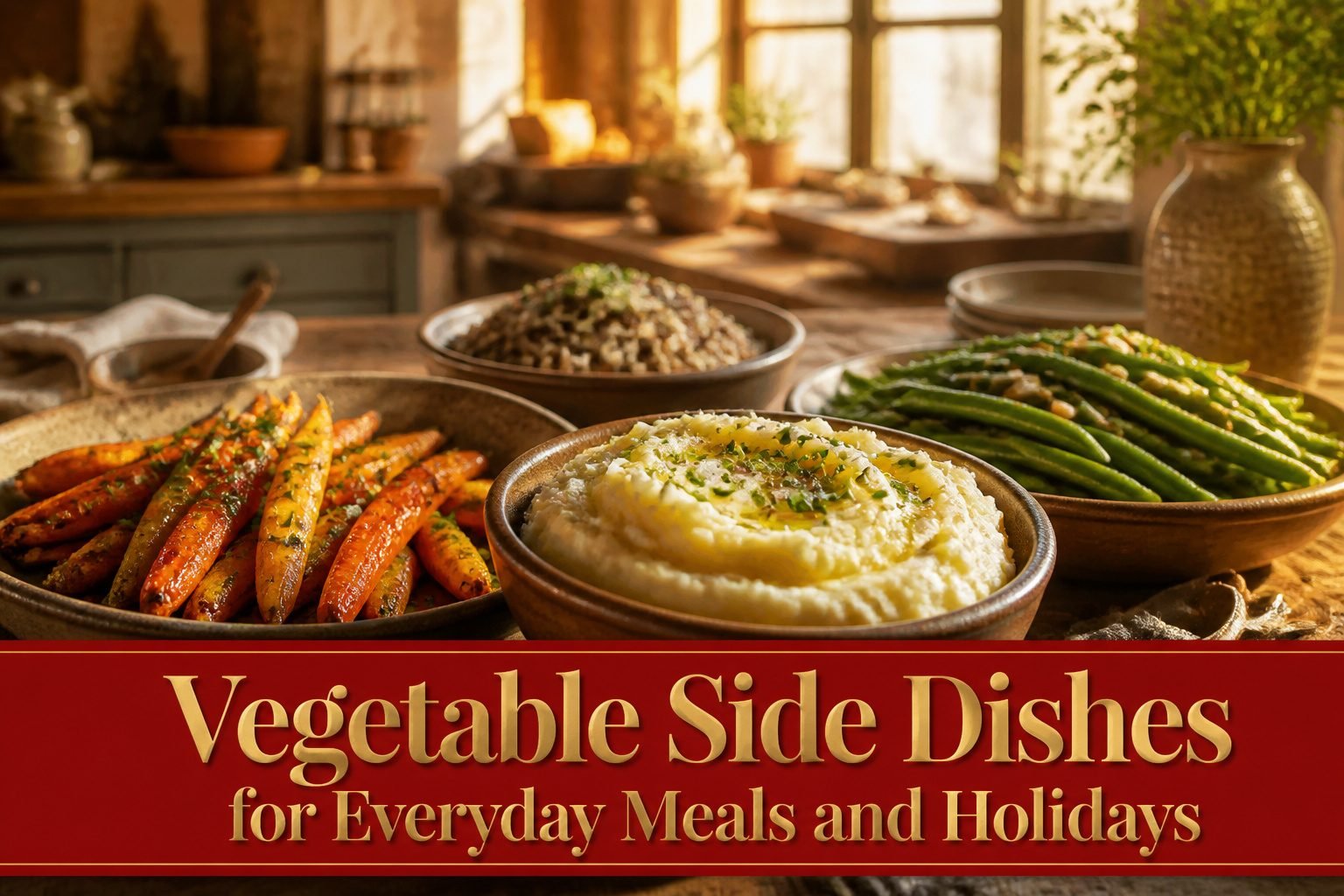

The best vegetable side dishes earn their place on the table without demanding one.
What separates the keepers from the forgettable is timing: pistachios folded in at the last minute so heat does not steam them limp, or broccoli started in a ripping-hot skillet so the edges char before the centers go soft and gray-green.
Wild rice takes longer than white rice, and the grains burst into chewy curls when they are actually done; shorter cooking leaves them hard at the center, which is just underdone, not al dente.
1. Wild Rice Pilaf with Pistachios and Pomegranates

Wild rice pilaf with pistachios and pomegranates is the kind of dish that earns its spot on the holiday table but does not demand one.
The jeweled red seeds against the dark grain read as effort and expense even though the actual work is minimal. Pomegranate seeds are a mess to extract, and that is why most people quit too early.
Cutting the crown and scoring the rind into quarters before breaking it apart underwater releases the arils cleanly; the pith floats, the seeds sink, and your shirt stays intact.
The effort pays off in bursts of tart juice that cut through the richness of nuts and butter.
The pistachios will turn soft and sad if you stir them in too early.
Toast them separately and fold them in at the last minute, or better yet, scatter them on top of each serving so the heat of the rice does not steam them into limpness.
The same logic applies to any nut you are using for crunch. Wild rice itself takes longer than white rice, and the grains burst open into chewy curls when they are done enough.
A shorter cook leaves them hard at the center, which some people mistake for al dente but is really just underdone.
Paint the bowl with a little extra pomegranate molasses if you keep it around, or a squeeze of lemon if you do not; the dish needs acidity more than it needs sweetness.
Recommended Products

Ready for a Jalapeño Lime Fiesta? Awaken your taste buds with the delicious Jalapeño Lime No Shell Pistachios by Nichols Farms. They’re a blend of fresh citrus and a kick...
2. Simple Kohlrabi with Pistachios and Sage

Kohlrabi tastes like the part of broccoli you already like best, the stem, once you strip away the fibrous skin and stop guessing at what to do with it.
The bulb stays crisp even after a few minutes in hot butter, which makes it forgiving if your timing slips.
Brown butter does the real conversion work here.
Let it go just past nutty into almost-burnt, then drop in whole sage leaves for a quick fry. They come out crackling and taste like concentrated Thanksgiving stuffing.
Chop the kohlrabi into half-inch pieces so the centers soften slightly while the edges keep their snap. Pistachios go in at the end; anything earlier and they lose their crunch to the residual heat.
The whole thing takes about as long as a pan of chicken thighs needs to rest.
Fried sage leaves are the ingredient that makes people ask what you did differently. The kohlrabi greens, if they’re still attached and not rubbery, wilt down in the same pan in thirty seconds and belong on the plate too.
Recommended Products

100% PURE POMEGRANATE MOLASSES — Made only from freshly squeezed pomegranate juice (Nar Eksisi). No added sugar, no thickeners, no preservatives, no artificial colors or flavors. Loaded with antioxidants, more potent than green tea, this pomegranate molasses is a superb source of nutrients. A single-ingredient, clean-label pomegranate syrup with a naturally smooth, pourable texture that adds bright, sweet-tart complexity to dishes without overpowering.

Premium Quality

3. Za’atar Roasted Fingerling Potatoes with Yogurt Tahini Sauce

Fingerling potatoes carry seasoning differently than standard russets or Yukon Golds. Their thin skins crisp in a hot oven without peeling, and the waxy flesh stays dense and creamy instead of going floury and dry.
That texture matters once you toss them with za’atar, because the spice blend needs something to cling to.
I reach for a Palestinian-style mix with dried thyme, sumac, sesame seeds, and a little salt, not the prefab versions bulked up with citric acid and dried oregano. The sumac’s tartness against the warm sesame is the point.
The yogurt tahini sauce breaks if you build it wrong. Room temperature is where most people lose it: yogurt straight from the fridge hits warm potatoes and turns grainy, and tahini seizes if you add it too fast.
I whisk the tahini with lemon juice and a spoonful of warm water first, until it loosens to the consistency of loose peanut butter, then fold in room-temperature yogurt last.
If the potatoes just came off the sheet, let them cool five minutes before you sauce them. The sauce holds for an hour on the counter after that, which is enough time to get everything else to the table.
Recommended Products

One 13 oz box of Birds Eye Cheddar Broccoli Bake Frozen Vegetable

Vibrant Purple Heads: Purple Magic Hybrid Broccoli boasts large, uniform heads with bright, tight beads and a stunning purple color that extends throughout the heads, stems, and leaves, making it a beautiful addition to any edible garden.

PREMIUM FRESH BROCCOLINI IN BULK: Our 18-count, avg 12 lb case of broccolini ensures chefs have a steady supply of this gourmet vegetable. Perfect for adding a unique, delicious touch to your culinary creations.
4. Skillet Brussels Sprouts with Chorizo

Chorizo in a hot skillet renders enough fat to cook the sprouts, so no extra oil goes in.
I use a slotted spoon to lift the browned sausage out, leaving the drippings behind, then tumble the halved Brussels sprouts cut-side down into the same pan.
The timing that works is a solid sear without moving them for the first few minutes, then a toss and another few minutes until the edges char and the centers still resist a knife.
If your chorizo throws off more fat than you expected, spoon some out before the sprouts go in; too much liquid and they steam instead of crisp.
The rendered fat carries enough flavor that even with a little removed, the sprouts pick up a smoky, spicy backbone that makes this feel like more effort than it was.
Recommended Products

Premium Dried Sage Leaves

100% PURE SAGE FOR KITCHEN & RITUAL: Our premium dried sage leaves are versatile for both culinary creations. They are natural sourced, non-GMO, and free from additives.

Aromatic McCormick Gourmet Organic Sage Leaves have pungent, piney flavor
5. Zucchini Ribbon Salad

A ribbon of zucchini needs to bend like a ribbon, not crack like a chip.
I run the vegetable lengthwise through a Y-peeler or mandoline until each strip is thin enough to fold back on itself without snapping in the middle.
That edge, right where translucence starts, is where the texture turns from stiff to supple.
Salt the shreds and let them weep in a colander for 15 minutes. I skipped this step once, thinking the salad would stay crisper without the wait.
The ribbons went limp on the plate within ten minutes of hitting the dressing, and the bottom of the bowl pooled with water no one wanted to eat.
The salt draws out enough moisture that the finished salad stays structured through dinner.
For the dressing, reach for something that clings rather than pools. A thick lemon vinaigrette or a smear of seasoned ricotta works.
Thin, vinegar-forward dressings run straight off the ribbons and collect in the plate’s well, so keep the acid modest and bind it with oil or a spoonful of something creamy.
Toss at the last minute, or the salt still in the zucchini fibers will start the whole cycle again.
6. Easy Broccoli with Garlic and Lemon

High heat is the only way to cook broccoli that actually tastes like broccoli. Broccoli needs to start in a ripping-hot skillet or oven so the edges char before the centers go soft and gray-green.
That color change is your warning: once you see it, the florets have steamed themselves inside their own moisture and the bright, slightly bitter edge is gone.
Garlic goes in after the broccoli has its color, never before. Second cloves in cold oil turn acrid and acrid garlic ruins the whole pan.
The lemon is what separates this from every other roasted green vegetable on the table, but lemon added while the broccoli is still hot turns sharp and thin.
Wait until the pan has cooled enough to handle, then squeeze a half over the florets and toss.
You want to taste the butteriness of the char first, then the citrus behind it. A full lemon is too much for most bunches; start with half and see if the plate needs more.
Recommended Products

RICH, TANGY FLAVOR – Crafted from 100% organic pomegranate juice, slowly reduced into a thick, bold syrup with naturally tart and fruity notes.

Delicious Glaze for Lamb Stew or Chicken!

The package length of the product is 24.1 centimeters
7. Roasted Radishes

Heat does something unexpected to radishes: past a certain threshold, the peppery bite that makes them sharp on a crudité plate turns sweet and almost buttery.
The same raw radish that clears your sinuses softens into something you would serve beside roast chicken without a second thought. Radishes left in the crisper after a salad plan falls through roast better than they ever would have raw.
Trim the greens and tails, halve them if they are golf-ball size or leave them whole if they are smaller. A hot oven, around 425°F or higher, does the work.
Toss them with olive oil and salt, spread them cut-side down on a sheet pan, and roast until they can be pierced easily with a knife and the exterior has gone from bright pink to a muted, almost blushed rose.
That color shift is your signal they are done; pull them when the edges look spent, not when they are burnt. The centers stay creamy while the outside wrinkles slightly and concentrates.
They need nothing beyond the oil and salt, though a pat of butter melted over them in the last few minutes does not hurt. What they really need is the forgiveness factor: a rescue for produce you forgot you bought.
Recommended Products
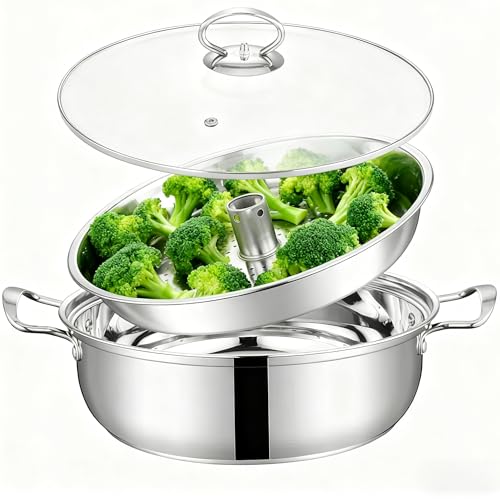
Engineered for Steaming Broccoli Just Right Purpose-built for vegetables like broccoli, with a focused steam pathway for quick, even cooking. Vertical Steam Column for...
8. Green Bean Casserole

Fresh green beans hold up to the long bake better than canned, and the difference in texture is worth the extra ten minutes of trimming.
I make the cream base with butter, flour, and milk, then fold in sautéed mushrooms and a little garlic.
It is more work than opening a can of condensed soup, but the flavor is cleaner and you control the salt.
The fried onion topping is not non-negotiable, though I have never seen the dish disappear faster than when the onions are piled high.
Bacon works as a partial substitute if someone at the table dislikes them, but you lose the crunch that makes the casserole feel like a holiday.
A slow cooker frees oven space for the turkey, which matters more than I expected the first Thanksgiving I tried to juggle both.
Recommended Products
Latin/Botanical Name: Salvia Officinalis

The information below is per-pack only

Warm, Musky & Fragrant: Woody herbal depth that pairs with caraway, ginger, marjoram, and paprika.
9. Honey Ginger Green Beans

Fresh ginger can clump into stubborn little knots that leave one bite fiery and the next bland.
Grating it fine and stirring it into the warm oil off the heat for a full 30 seconds breaks up the fibers and lets the flavor bloom evenly across every bean.
The honey follows the same logic: too much and the glaze turns to brittle candy as it cools, too little and you miss that rounded sweetness against the sharp ginger.
A thin drizzle, just enough to coat the back of a spoon, gives you a lacquer that stays glossy even at room temperature.
These beans hold up cold better than most green vegetable side dishes because the glaze acts like a light pickle, tightening the skins and keeping some snap.
The honey also balances the raw edge that cold vegetables can take on, so they taste intentional straight from the refrigerator rather than like leftovers you settled for.
Pack them for lunch or set them out with a spread; they do not need reheating to make sense.
10. Roasted Maple Brussels Sprouts with Pancetta

Maple syrup on Brussels sprouts needs a hot oven, but not too hot.
Anything past 400°F and the sugar scorches before the sprouts soften through; 375°F to 400°F is the zone where the syrup turns glossy and brown instead of bitter and black.
I watch the cut edge of a halved sprout for the cue: deep amber, not charred.
Pancetta carries the dish better than bacon here. Bacon brings smoke and sugar of its own that fights the maple; pancetta is cleaner, saltier, purely pork.
The fat renders slowly and coats the sprouts as they roast. Lardons work the same way, since they are just thick-cut pancetta or bacon by another name.
Either way, the pieces need enough heft to survive the full roast without crisping to nothing. I dice cold pancetta myself rather than trusting the pre-cut tubs, which tend toward thin shavings that disappear.
The fat does double duty: it keeps the maple from sticking to the pan, and it means you need less oil than you would for plain roasted sprouts.
A crowded pan still steams instead of browns, so I split between two sheets if the sprouts touch.
Recommended Products

100% NATURAL & PREMIUM QUALITY: Made exclusively from 100% natural pomegranates, our pomegranate syrup is free from any artificial additives or preservatives. Enjoy the rich, authentic taste of pure pomegranate

ONE INGREDIENT – PURE POMEGRANATE Made from one single ingredient: concentrated pomegranate juice. No added sugar, no preservatives, no additives — nothing else.

11. Creamy Horseradish Potato Salad

Prepared horseradish loses its sharp edge overnight in the fridge, so the dressing needs to start almost too intense.
I stir in a little more than seems right, taste, then add a touch more. By morning the heat settles into something that reads as warmth rather than punch.
Warm potatoes drink up the dressing in a way cold ones never quite manage.
I fold them together while the potatoes are still just tender enough to hold their shape, maybe ten minutes out of the pot. The starch loosens and thickens the liquid without any extra work.
Mayo keeps this creamy; use just enough to coat the potatoes without making them cling together. Too much and the salad turns gloppy; too little and the horseradish sits harsh on the tongue.
I work in spoonfuls until the potatoes look lightly dressed rather than sauced. A splash of the cooking water helps everything smooth together when the mixture seems too tight.
12. Mexican Street Corn Off the Cob

Frozen corn kernels from the grocery case work better than fresh here, because the sugars have settled and the kernels char without scorching.
I set a 12-inch cast-iron skillet over high heat until it smokes, add the corn in a single layer, and let it sit untouched for three to four minutes.
The color should be deep brown in spots, not black; stir once, then leave it again. The char carries most of the flavor, so rushing this step gives you steamed corn with spices.
Cotija cracks and crumbles, and many stores outside the Southwest stock it unpredictably. When it is missing, aged feta in brine is the substitute that keeps the same salty, dry crumble.
I have used Pecorino Romano in a pinch, though it melts slightly into the warm corn and loses the texture that makes the dish.
Mayonnaise versus crema splits cooks into two camps. I land on mayonnaise for the firmer consistency; Mexican crema slides off the kernels and pools in the bowl unless you fold it in at the table.
Thin the mayonnaise with a squeeze of lime and a pinch of chili powder, toss the corn while it is still hot, then finish with the cheese and more chili powder at the end.
13. Garlic Butter Cooked Baby Carrots

Baby carrots from the grocery store usually need more than just steaming to feel like a real side dish.
A slow simmer in butter does what water cannot: it concentrates the sugars and turns that mild sweetness into something almost glazed.
Add the garlic late so it browns but does not burn. Add the cloves only after the butter has melted and the carrots have had a few minutes head start.
Throw it in too early and the garlic browns before the carrots soften; too late and you get raw sharpness instead of that mellow, nutty undertone.
I smash the cloves with the flat of my knife so they perfume the butter without disappearing.
A tight lid for the first stretch traps steam and speeds the cooking. Once the carrots yield to a knife tip, I pull the lid off and let the butter reduce until it coats like a thin sauce.
A pinch of salt at the end, never at the start, or the liquid draws out and the glaze breaks.
14. Roasted Cauliflower

Cauliflower turns bitter and sulfurous when it steams in its own moisture, which is exactly what happens in a crowded pan.
High heat fixes this. A 425°F oven drives water out fast enough that the florets brown before they soften to mush.
The color tells you when it is done. You are looking for dark, almost burnt spots across at least a third of the cut surfaces, not the pale gold of a roast chicken.
That deep color is the Maillard reaction, and with cauliflower it carries a nutty, bittersweet flavor that reads as smoky even without paprika.
The florets will still flex slightly in the center when you poke them; that is the right texture, not underdone.
A full sheet pan should hold about two pounds of florets in a single layer with space between them.
Push past that and the pan cools down, moisture pools, and you get gray, flabby cauliflower that no amount of salting after the fact can rescue.
If you are cooking for more than four people, use two pans on separate racks and swap their positions halfway through, or work in batches and serve the first round at room temperature, which roasted cauliflower handles better than most vegetables.
15. Creamy Spinach Cheese Bake

Frozen spinach often handles the heat of a cheese bake better than the fresh kind, which is backwards from how most vegetables work.
Fresh leaves throw off so much water in the oven that the dish pools and splits even when you drain them; frozen has already done its weeping in the processing plant, and once you squeeze the thawed spinach in a towel until it feels like damp moss, it stays dry through baking.
The cheese matters as much as the moisture.
Block-style cheddar, grated by hand, melts creamy because the producers add less cellulose to keep it from clumping in the bag. Pre-shredded cheese goes stringy and can separate into oily puddles, which looks wrong against dark green spinach.
I learned this after a Christmas Eve bake came out looking grainy, and the difference was obvious side by side with the version I made the following week.
The béchamel base should coat a spoon thickly before the cheese goes in; thin sauce plus wet spinach equals soup.
A heavy squeeze of the thawed leaves and a modest, melting cheese turns this into the kind of side that gets scraped clean.
Frequently Asked Questions
What are some easy vegetable side dishes?
The 15 recipes in this collection range from 10-minute skillet dishes to low-effort oven roasts.
Zucchini ribbon salad and garlic butter baby carrots both come together in about 20 minutes with minimal chopping, while roasted radishes and broccoli need little more than a hot oven and salt.
Most rely on one or two techniques you already know.
How do I make green bean casserole?
Start with fresh trimmed beans rather than canned. Build a cream base from butter, flour, and milk, then fold in sautéed mushrooms and garlic.
Pile fried onions high on top before baking; bacon works as a partial substitute if onions are not popular at your table, though you lose the crunch that signals a holiday dish.
A slow cooker version frees oven space for the turkey.
What are good make-ahead side dishes for Thanksgiving?
Honey ginger green beans hold up cold and taste intentional straight from the refrigerator, so they work for potlucks too. Wild rice pilaf can be assembled ahead and topped with pistachios at the last minute.
Roasted and mashed vegetables generally reheat well, and most of these dishes can be prepped 1 to 2 days ahead; use fresh herbs or a final drizzle just before serving to wake them up.
What’s an easy side dish to make?
Roasted radishes require almost no prep: trim, toss with olive oil and salt, and roast at 425°F until they turn from bright pink to a muted blushed rose.
They need nothing beyond the oil and salt, though butter in the last few minutes helps. The dish rescues forgotten produce and takes under 30 minutes from start to finish.
What are the top 10 side dishes?
Among the 15 here, the ones that disappear fastest at gatherings tend to be the skillet Brussels sprouts with chorizo, green bean casserole with a heavy fried onion topping, creamy spinach cheese bake, and roasted maple Brussels sprouts with pancetta.
The wild rice pilaf looks expensive and effortful despite minimal work, and the Mexican street corn off the cob delivers big flavor from a single skillet.
What is a good vegetable dish to bring to a potluck?
Honey ginger green beans travel well cold and do not need reheating, which matters when oven space is scarce.
The glaze keeps them glossy and snappy at room temperature. Za’atar roasted fingerling potatoes with yogurt tahini sauce also holds for about an hour after dressing, and the potatoes can be roasted ahead and sauced on arrival.