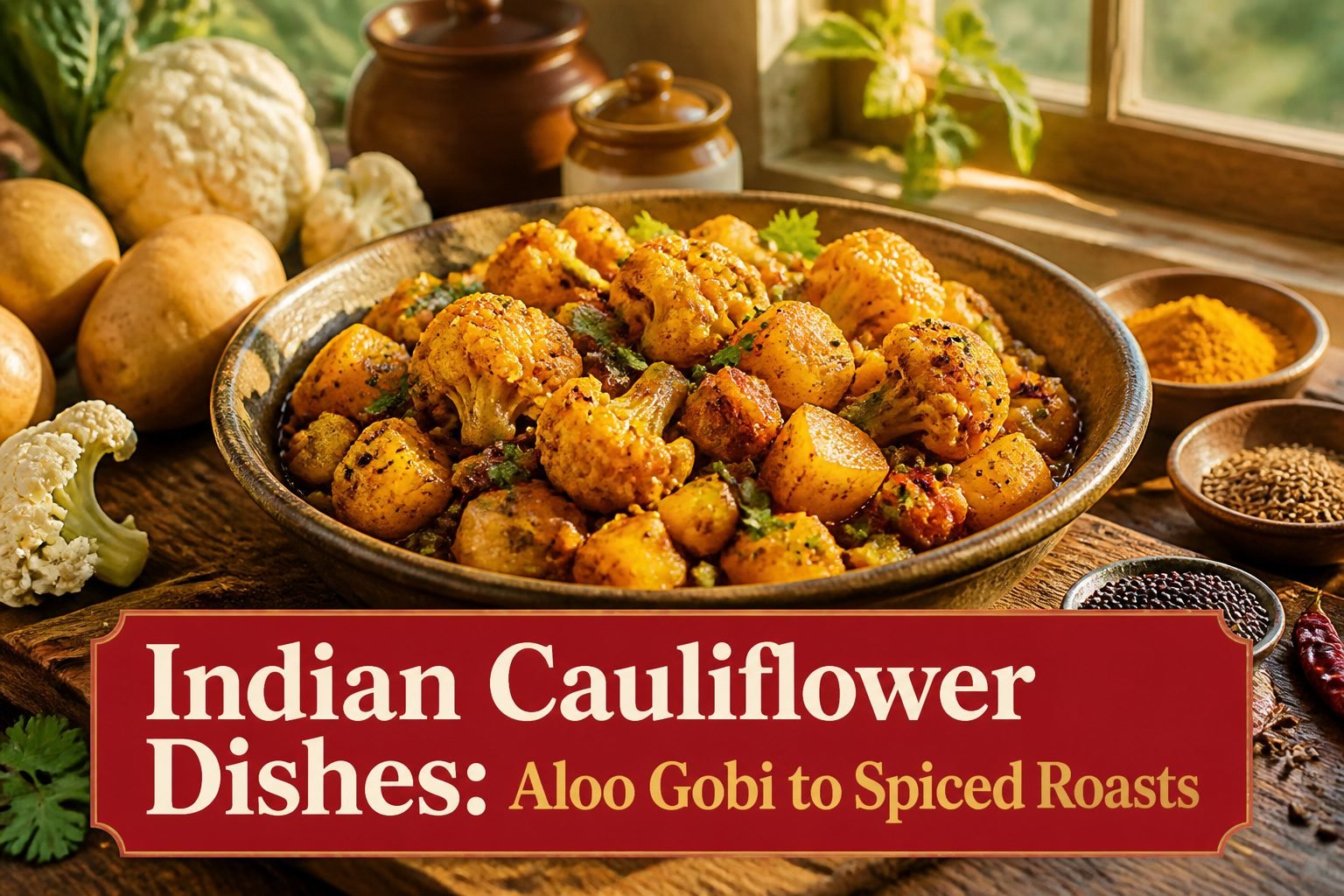

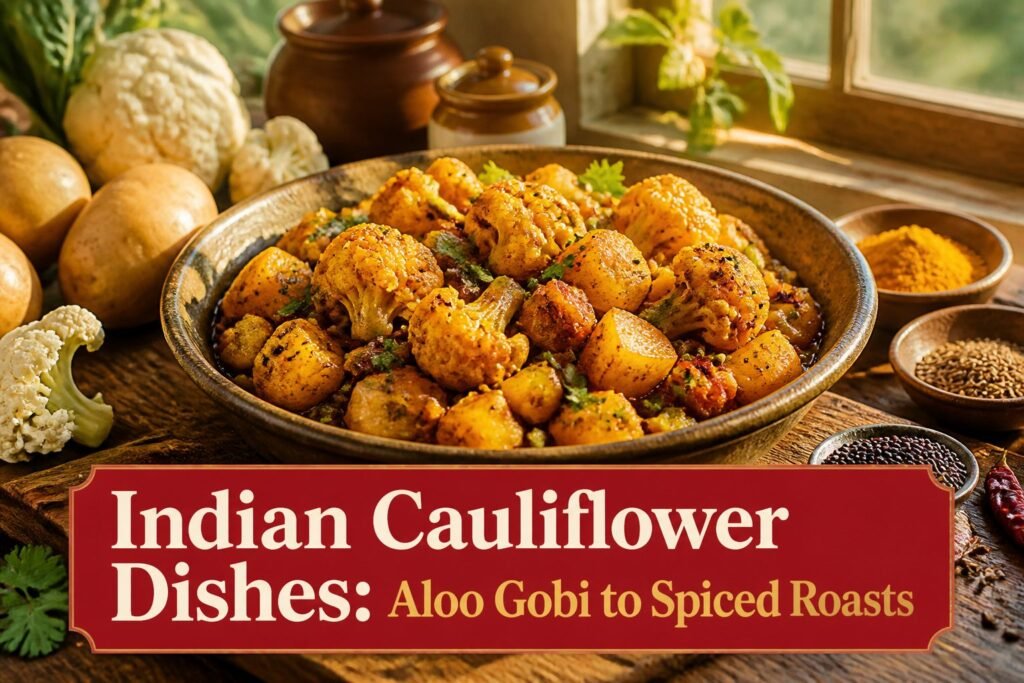
An Indian cauliflower dish is a dry or saucy preparation built from florets, whole spices bloomed in hot oil, and a handful of pantry staples like turmeric and cumin.
The difference between a flat, dusty version and one worth eating comes down to timing: mustard seeds must splutter in the fat before the vegetable ever hits the pan, a step many weeknight cooks reverse.
Aloo gobi, the best-known example, needs about 40 minutes and lands around 304 kcal per serving when the potatoes are par-fried first to keep their edges.
Aloo Gobi

Aloo gobi is the Indian cauliflower dish most home cooks in the States already know by name, even if they have not made it yet.
It pairs potatoes, or aloo, with cauliflower, or gobi, in a dry curry that comes together in about 40 minutes with a single pan and standard grocery-store spices.
The weights from the classic version work out to roughly 2 medium potatoes (about 240g) and 1 small cauliflower head (about 280g), plus ½ teaspoon cumin seeds, 1 medium red onion (about 200g), and 2 tablespoons oil.
The technique matters more than the exact spice blend.
Some cooks par-fry the vegetables first to build browning, then pull them out and build a masala from the onion, tomato, and spices before folding everything back together to finish covered and low.
Others go straight to the pot with raw cauliflower and rely on steam and time.
The par-fry route takes the full 40 minutes but keeps the cauliflower firm and the potatoes from going soggy; it also lands around 304 kcal per serving, making it a light dinner even with the oil.
I have seen recipes that call for steaming the potatoes separately first, and that does save a few minutes, yet the texture turns closer to a coat of sauce over soft vegetables than the slightly crisp, separate edges that make the dish worth eating.
For weeknights, the one-pan method wins.
Recommended Products
✔️ Directly Sourced from Sri Lankan Farms – Carefully harvested from trusted farms and processed in an internationally certified facility in Sri Lanka to ensure quality, safety, and consistency.

TIKKA CURRY MASALA — 17-INGREDIENT SPICE BLEND SEASONING: Pride of India’s authentic Indian curry seasoning is crafted from 17 real ingredients, including turmeric, coriander, red chilli, cumin, mustard, black pepper, bay leaf, fennel, ginger, onion, garlic, cardamom, cinnamon, clove, mace, and star anise. This balanced blend delivers the rich, layered flavor of genuine tikka curry. Responsibly sourced and hygienically processed, it brings consistent taste and quality to every jar. The dual-sifter jar lets you shake or spoon the perfect amount for quick meals or slow, from-scratch curry cooking.
🌿 100% Natural & Herbicide-Free: Premium whole curry leaves (kari patta) grown in the USA without any herbicides. No chemical weed killers — pure and clean from farm to your kitchen.
Aloo Gobi Matar

Peas turn Aloo Gobi into a one-pot meal that needs no side of dal. The base dish is already substantial, but the addition bumps protein and makes the plate feel more complete on its own.
Frozen peas work here and hold up better than fresh ones in a long simmer.
Fresh peas go starchy and split if you cook them the full 20 minutes the cauliflower and potato need; frozen stay round and sweet because they are already blanched.
I add them in the last 5 minutes, straight from the bag, so they heat through without turning gray.
The sweetness is the real change. A cinnamon stick and a pinch of coriander powder play against that, grounding the dish so it does not read as too bright.
This version makes sense in winter, when peas are in season and the extra warmth feels right, or any night you want the comfort of Aloo Gobi without setting out a second pan.
Recommended Products

Cauliflower Curry

Cauliflower curry treats the vegetable as the solo center of the plate, not a supporting player.
Onions, tomatoes, and curry leaves simmer into a real sauce around the florets, which makes for a wetter, more spoonable dish than aloo gobi’s dry, fry-pan style.
The cooking lands in that same 20–30 minute window, and a serving typically runs around 230 kcal, noticeably higher than the 120–150 kcal of its potato-free cousin simply because the gravy adds body.
That sauciness matters for weeknight eating: it stretches further over rice or roti, and the florets soak up flavor rather than keeping their roasted edge.
Some versions call it gobi curry plain, others tag on peas for aloo gobi matar, but the core recipe without potatoes stays the clearer choice when you want the cauliflower itself to carry the meal.
Recommended Products
One 3.75 ounce container of Yellow Mustard Seed

1.66 ounces of organic cumin seeds

You'll LOVE our Cumin Seeds, Mustard Seeds, Fenugreek Seeds by Rani Brand--Here's Why:
Roasted Indian Cauliflower

High heat changes the whole deal with an indian cauliflower dish. Where stovetop aloo gobi blooms spices in oil first, roasting puts the coating onto raw florets and lets the oven do the work.
I toss bite-sized pieces with olive oil, turmeric, garam masala, maybe a little tomato paste and sugar, then spread them out hard and hot.
The oven temperature matters more than the exact spice mix.
One approach runs 375°F for about 15 minutes, flipping halfway through; another pushes 425°F and stretches toward 25 minutes. Either way, you are not chasing fork-tender here.
The textural flip is what matters: the same spice set that softens into saucy cubes on the stove instead dries onto the surface, and the high heat chars the edges while the centers stay firm.
The cauliflower keeps its structure, getting crisp and almost nutty at the margins rather than melting in.
That coating method also means mustard seeds, shallot slices, or other add-ins roast right alongside, sweetening and toasting without any pre-cooking. Finish with lemon and cilantro after it comes out, while the edges are still crackling.
Recommended Products

Pack of one, 9 oz box

Organic Chickpea Coconut & Turmeric Curry : Full of plant proteins; this chunky organic entree features chickpeas and carrots in a creamy coconut sauce with turmeric and ginger

Indian Spiced Cauliflower and Peas

A cauliflower floret sautéed with English peas and whole cumin holds a different place on the plate than Aloo Gobi Matar.
Skipping the potato strips the dish down to 20 minutes, start to finish, and the result is lighter in both body and starch load.
I reach for this version on weeknights when I have already made or bought one other substantial thing, like a dal or rice, and need a vegetable dish that will not compete for heaviness.
The technique is straightforward. A 1 1/2-pound cauliflower, cored and sliced half-inch thick, goes into a hot skillet with 3 tablespoons of ghee or oil.
It colors for a minute or two, then softens over five minutes more. Whole cumin seeds, black mustard seeds, fresh ginger, and garlic follow.
The peas, fresh or frozen, steam under a lid for 2 to 4 minutes until just tender. A squeeze of lime at the end wakes everything up.
This preparation also forgives improvisation better than its potato cousin.
No English peas on hand? Snow peas or sugar snap peas, trimmed, work in half the time.
The absence of potato means nothing goes gluey if your timing slips by a minute. The trade is simpler comfort for quicker relief, a fair swap on nights when cleanup speed matters as much as dinner itself.
Recommended Products

The information below is per-pack only No hydrogenated fats or high fructose corn syrup allowed in any food No bleached or bromated flour No synthetic nitrates or nitrites
Spiced Indian Cauliflower

Spiced Indian cauliflower carries the dish without potatoes or peas to dilute the flavor, so the technique matters more than when cauliflower is just one component among several.
The oven approach and the stovetop approach split on how the spices meet the vegetable: in the oven, cumin, turmeric, and garam masala coat raw florets with oil before 375-degree heat toasts them together; on the stove, cumin seeds and black mustard seeds sizzle in hot ghee or oil first, then cauliflower goes in to color before ground turmeric and fresh ginger join.
The stovetop version builds perfume in layers, but the oven method is the one you can walk away from.
Oil choice shifts with the heat. Grapeseed oil holds up to roasting without smoking; olive oil turns bitter past its smoke point.
Ghee on the stove gives the warmer, nuttier base that makes whole spices bloom properly, though vegetable oil works fine if that is what you have.
Where aloo gobi softens everything into a home-style curry, this preparation keeps the cauliflower in defined pieces with spice clinging to the surface rather than swimming in gravy.
The florets need to be cut to a consistent half-inch or so, whether you break them by hand or with a knife. Otherwise the smaller bits char before the thick stem pieces soften.
Moderation with garam masala keeps the heat in check; one to three teaspoons covers a typical head, depending on whether you want background warmth or something that clears your sinuses.
Cayenne adds its own separate fire, so add it only if you want two kinds of heat competing rather than cooperating.
Recommended Products

Mild, Aromatic, and Full of Flavor – Badia Curry Powder delivers a balanced blend of spices with a gentle heat and rich aroma – perfect for adding authentic flavor to a wide variety of dishes without overpowering the natural taste of your ingredients

You'll LOVE our Curry Leaves Powder by Rani Brand--Here's Why:

An essential component in Indian cooking, curry can describe an entrée, such as chicken curry, or the combination of spices used to flavor it
Pan-Roasted Spiced Cauliflower with Peas

A hot, heavy pan does something to cauliflower that the oven only approximates. The florets blister and char in spots while the centers stay firm, a texture you cannot get from slow roasting.
I start with 3 tablespoons of ghee or oil in a heated skillet, add half-inch slices from a 1½-pound cauliflower, and stir until color shows at the edges.
Five minutes over medium-high heat takes it to half-cooked; pulling the heat back keeps the browning from running ahead of itself.
The peas go in late.
Cumin seeds, mustard seeds, turmeric, and optional makrut lime leaves hit the pan first, sizzling before ginger, garlic, and chilies join. Then the peas, fresh or frozen, with a cover dropped over them for 2 to 4 minutes.
Steam softens them just enough. The florets are blistered and yielding; the peas stay bright and barely warmed through.
Scallions, cilantro, and a lime wedge finish it. The whole thing clocks 20 minutes, and the contrast in textures is the point of doing it this way rather than roasting everything together.
Indian Cauliflower with Yogurt

Yogurt does something tomato paste cannot in a cauliflower sauce. Use 300 grams of yogurt with 3 tablespoons of tomato paste; the acid in the yogurt cools the heat from cayenne or Kashmir pepper rather than amplifying it.
Dairy fat wraps capsaicin molecules, so the warmth arrives slower and fades cleaner. That chemistry lets you build deeper spice without punishing a weeknight palate, especially when children at the table already eye vegetables with suspicion.
The sauce structure changes too. Tomato-based curries lean on reduction and long cooking; a yogurt sauce tightens almost instantly as the proteins hit the heat, creating a clingy, matte finish instead of a glossy one.
I find this matters more than I’d expected. The chunky curry base Swasthi describes becomes almost velvety around the florets because the yogurt proteins coagulate around the cauliflower’s edges, binding where watery tomato would pool.
Add the optional lime juice and you push the whole thing toward a bright, almost raita-adjacent profile that reads as a complete dish rather than a vegetable in sauce.
Ghee carries the aromatics first, then the yogurt goes in off the heat or over gentle warmth.
Rushing this splits the dairy into grains and whey, and there is no recovering it. I have watched this happen from impatience: the sauce never smooths, and you end up serving something that looks curdled even when the flavor holds.
Low heat, constant stirring, and adding the yogurt after the initial onion-ginger-garlic base has cooled slightly are the three moves that prevent it.
Recommended Products

MUSTARD SEEDS - adds the mustard flavor you love, to dishes you cook including vegetables, meat, sauces, spice blends, cheese and more.

PUNGENT MUSTARD FLAVOR: McCormick Culinary Whole Yellow Mustard Seed delivers a pungent, mildly spicy flavor and aroma

You'll LOVE our Cumin Seeds by Rani Brand Here's Why:
Blooming the Spices

The oil needs to be hot enough that mustard seeds splutter audibly within seconds of hitting the pan. Cumin follows, or stands alone, depending on whose kitchen you are in.
The heat unlocks the volatile oils in the seeds; skip this step and the spices stay dormant, giving you a flat, dusty flavor that no amount of later seasoning fixes.
The cauliflower goes in only after the popping subsides, so the seeds have already released their aroma into the fat.
A standard technique in South Indian kitchens is to bring out the flavor of the cumin and mustard seeds by adding them first to heated oil or ghee. Cover the pan and the mustard seeds should make a splattering sound. You may need to lower the heat so that the seeds pop but do not burn.
This timing is the part most weeknight cooks get wrong. The original NYT recipe adds vegetables first and spices later, which commenters flagged as a misstep; the seeds need higher heat than cauliflower can take.
One cook lowered the ghee to 1 tablespoon, bloomed the spices properly, and rescued the dish. The other route, adding everything at once, saves a bowl but costs you the depth that defines the dish.
Recommended Products

Spice up your favorite dishes with a dash of Sun Brand Madras Curry Powder.

Penzeys Curry combines fabulous curry flavor with our bright, fresh, vibrant ginger and garlic bits

A DELICIOUS INDIAN SIMMER SAUCE: Maya Kaimal's Kashmiri Curry is a balanced curry with hints of nutmeg, mace and rich tomato. Simmer with lamb for an authentic Rogan Josh, or enjoy with chicken, chickpeas or vegetables
The Core Spices

The same six spices show up in nearly every Indian cauliflower dish, whether it’s a dry aloo gobi or a saucier curry. Here’s how they work together.
- Turmeric (½ teaspoon in most recipes) gives the dish its golden color and an earthy base note. It blooms in hot oil for 30 seconds before anything liquid hits the pan.
- Cumin usually enters as whole seeds sizzled in oil at the start, though ground cumin works if that’s what you have. The amount is small—½ teaspoon to 1 teaspoon—because its job is aroma, not dominance.
- Coriander powder (½ teaspoon to 1 teaspoon) adds a citrusy warmth that rounds out the cumin without competing.
- Garam masala comes in at the end, ¼ teaspoon to 1 teaspoon, as a finishing blend of cinnamon, cloves, and cardamom. Its warmth can overpower if added too early or too generously. Madras curry powder works as a spicier substitute with a less musky aroma.
- Amchur, or dried mango powder, brings sourness without liquid. It lets you skip tomatoes entirely or cut back on them—½ teaspoon is the standard measure. If your pantry doesn’t have it, lemon juice at the finish does the same balancing work, though without the faint fruity depth.
- Red chili powder or Kashmiri chili powder controls heat separately from the warming spices, so you can adjust it without throwing off the rest of the profile.
Cooking Times

Aloo Gobi takes about 40 minutes from start to finish, which lands it squarely on a weeknight if you have the time to tend the stove.
Roasted cauliflower moves faster, around 15 minutes in a hot oven, though that does not count the few minutes of tossing with oil and spice.
Stovetop curries fall somewhere between, with some versions claiming 20 minutes and others stretching to 40 depending on how soft you want the vegetables.
| Dish | Total Time | Active Time | Hands-Off Time |
|---|---|---|---|
| Aloo Gobi | 40 min | 30 min | 10 min marinating |
| Roasted cauliflower | 15 min | 5 min | 10 min roasting |
| Stovetop curry | 20–40 min | Full attention | None |
The roasted route wins for speed but asks you to accept less sauce.
Aloo Gobi rewards the extra minutes with deeper flavor from the yogurt and spice marinade. If you have only 20 minutes, a quick pan-roast with peas and ginger is the honest choice, not a shortcut that disappoints.
What to Serve With It

Aloo Gobi turns out dry more often than not, and that dryness is exactly what makes yogurt the right call. A spoonful of cold plain yogurt on the side cools the spices and gives the florets something to dip into.
This is the version I cook most weeknights, the one Manali Singh describes as the everyday home style from Northern India.
When cauliflower simmers in a real sauce, rice makes more sense. Plan about 30 minutes for a curry with onion and tomato gravy, and serve it over basmati or jeera rice so the extra liquid has somewhere to go.
Flavored rices like turmeric rice work too, though I think they compete with a complex masala; plain basmati lets the cauliflower lead.
Flatbread splits the difference.
Naan works with either style if you tear it for scooping, and the drier the dish, the more you’ll rely on that bread to do the moving. Chapati or paratha play the same role with less chew.
Yogurt belongs with dry preparations; rice claims the saucy ones.
I keep all three on hand when I’m not sure which way the dish will go, because Aloo Gobi sometimes dries out more or less than planned, and a meal that stalls on that fact is a meal that doesn’t get eaten.
Frequently Asked Questions
What is Aloo Gobi?
Aloo gobi is a popular Indian cauliflower dish made with potatoes (aloo) and cauliflower (gobi), seasoned with spices and cooked as a dry curry.
It comes together in about 40 minutes with a single pan and standard grocery-store spices, and a serving lands around 304 kcal.
How do you prevent cauliflower from getting soggy in Aloo Gobi?
Par-fry the potatoes and cauliflower first to build browning, then pull them out and build the masala separately before folding everything back together to finish covered and low.
This route takes the full 40 minutes but keeps the cauliflower firm and the potatoes from going soggy, with slightly crisp, separate edges that make the dish worth eating.
Can you make Aloo Gobi without tomatoes?
Yes, you can skip tomatoes by using amchur (dried mango powder) or lemon juice at the finish for acidity and balance. The standard measure is 1/2 teaspoon of amchur; lemon juice does the same balancing work without the faint fruity depth.
What does gobi mean in Indian?
Gobi means cauliflower in Hindi and several other Indian languages. In the dish name aloo gobi, gobi refers to cauliflower while aloo refers to potatoes.
What is the Indian side dish that is made with potatoes and cauliflower?
That dish is aloo gobi, a dry curry from Northern India that pairs potatoes with cauliflower in a spiced, pan-cooked preparation.
It is typically served with plain yogurt on the side to cool the spices, plus roti or naan for scooping.
What’s the secret to perfect aloo gobi?
The secret is blooming the spices properly in hot oil before the vegetables go in. Mustard seeds need to splutter audibly within seconds of hitting the pan, and cumin seeds need that same high heat to release their volatile oils.
Skip this step and the spices stay dormant, giving a flat, dusty flavor no later seasoning can fix.