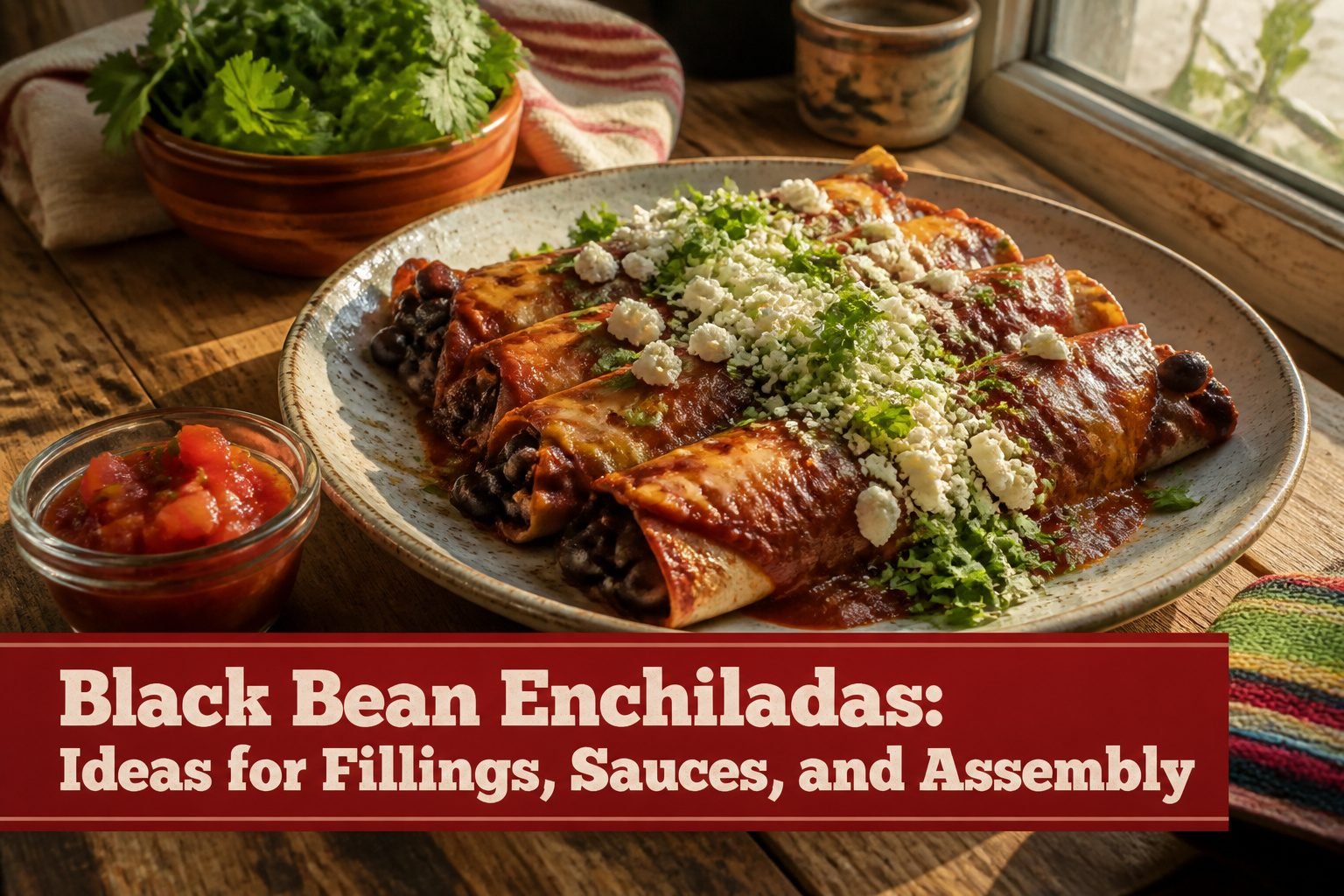

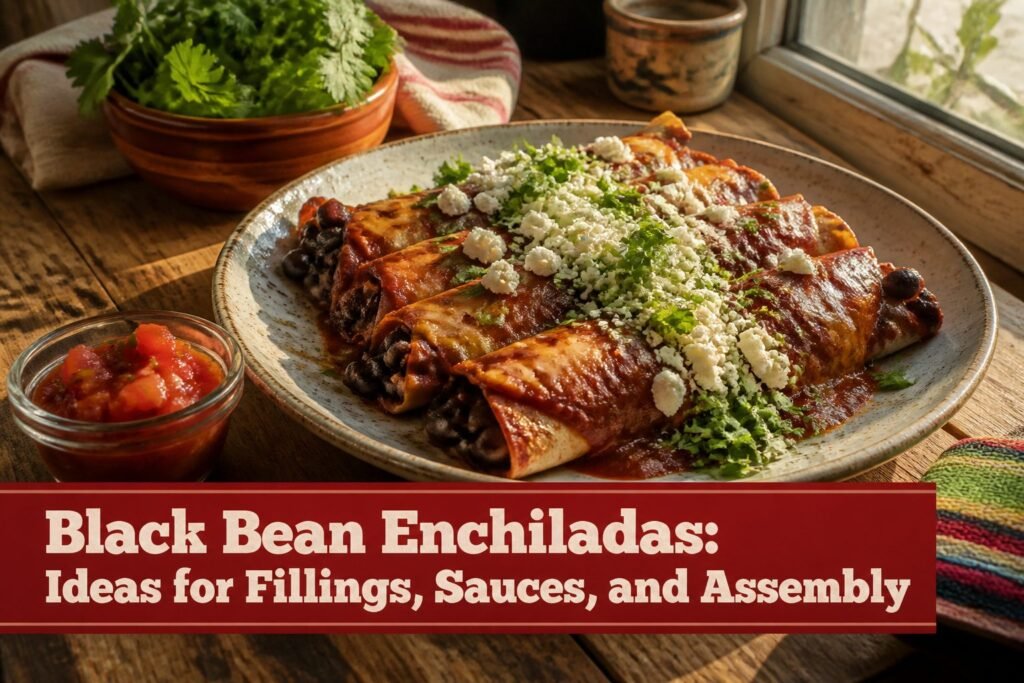
Black bean enchiladas are tortillas rolled around a bean filling, baked under sauce and cheese until the edges soften and the top spots brown.
Moisture control is where things get tricky: sauce steams the tortillas soft, but too much turns the whole dish to mush.
Most recipes call for one 15-ounce can of rinsed black beans and a 20-to-25-minute bake at 350°F or 400°F, with the lower temperature giving the filling more time to meld before the cheese sets.
1. What Black Bean Enchiladas Are

Black bean enchiladas are a Mexican casserole built from a few working-class staples that hold together better than they have any right to.
The core is simple: tortillas rolled around a black bean filling, tucked into a dish, and baked under sauce and melted cheese until the edges go soft and the top turns spotty brown.
The beans can be whole, mashed, or refried; the protein doubles up easily, since one can of rinsed black beans plus refried black beans is common.
Tortillas are usually flour, medium-sized, six to a batch. Sauce runs either red, from a cumin-spiked tomato base, or green, the tangy tomatillo kind that one version seasons with chili powder, cumin, and oregano.
Cheese is shredded cheddar or white cheddar, split between the filling and the cap on top. That cap matters: a full cup spread across the sauce gives the browned, bubbling finish that signals the dish is ready.
Every recipe I compared lands in the same 20-to-25-minute bake window, with ovens set anywhere from 350°F to 400°F. The dish feeds six as a rule, making it a practical weeknight construction rather than a weekend project.
What separates one version from another comes down to the filling’s moisture and the sauce’s heat, both of which the next sections sort out.
Recommended Products

0 gram trans fat per serving


Ready To Eat Black Bean Sofrito: Our Cuban black bean recipe delivers authentic traditional flavor and a clean label— No questionable ingredients or anything else you wouldn’t find in your own pantry.
2. The Beans and Their Preparation

Black beans carry these enchiladas, so how you prep them changes what you eat.
1 (15 ounce) can black beans, rinsed and drained, is the standard starting point. The rinsing matters: canned bean liquid is starchy and salty, and leaving it on turns the filling pasty and one-dimensional.
Some cooks build with three beans at once, adding pinto beans and a can of refried beans to the black beans. The refried beans act like binder, holding the filling together so the enchilada doesn’t crumble when you lift it.
Others skip refried entirely and let the whole black beans keep their shape, which gives each bite more texture against the sauce and cheese.
I mash about half the black beans with a fork and leave the rest whole. The mashed half soaks up seasoning and holds moisture through baking; the whole beans keep the filling from turning to mush.
If you want a denser, more cohesive roll, increase the ratio of mashed beans or stir in that scoop of refried.
If you want distinct pops of bean against the sauce, stay closer to whole. The 15 ounce can yields roughly 1½ cups drained, enough for four to six enchiladas depending on what else goes in.
Recommended Products

Organic red enchilada sauce made with traditional Mexican spices and chiles

Mild red enchilada sauce

SAUCE WITH KICK: Bring mild spiciness to your Tex-Mex dishes with this red enchilada sauce made from tomato puree, chile pepper, and flavorful seasoning
3. Corn or Flour Tortillas

Corn tortillas carry the authentic flavor profile, but they crack if you roll them straight from the package.
A quick steam softens them enough to bend without splitting: stack a few on a plate, flick water between each layer, cover with a damp paper towel, and microwave 25 to 30 seconds. Always grab extra; some will tear no matter what.
Flour tortillas are pliable from the start and easier to work with, which is why a lot of home cooks quietly prefer them.
They hold up to sauce and baking better, staying intact where corn can go mushy at the edges. You get a softer, less structured enchilada with a milder flavor that lets the filling take center stage.
Either works.
Corn gives you the traditional, slightly firmer result with more chew; flour gives you reliability and a more forgiving wrap. My own dishes land somewhere between the two when I want the meal on the table without the extra step.
Recommended Products

Product Type:Grocery

ENCHILADA SAUCE: Green chile enchilada sauce that the whole family will love

One, 28-ounce can
4. Red Sauce, Green Sauce, or Something Else

Sauce does two jobs in enchiladas: it carries most of the flavor and it keeps the filling from drying out in the oven. Red and green are the usual choices, and most recipes stop right there.
Red enchilada sauce is the one you will see in nearly every weeknight version.
A single 8–10 oz can covers a standard baking dish without leaving you with half a jar in the refrigerator. The flavor is mild and slightly sweet, which makes it forgiving with black beans.
Green sauce, usually tomatillo-based, runs brighter and more acidic. It works, but fewer sources build their black bean recipes around it, so you are on your own for proportions.
Whichever direction you take, the moisture is a risk as much as a benefit.
Sauce on the bottom of the pan before the tortillas go in steams them soft. Pouring the full amount over the top does the same.
One way to control it: use about a cup of sauce for baking and serve the rest heated at the table. That keeps some texture in the tortillas without turning the whole dish dry.
Recommended Products
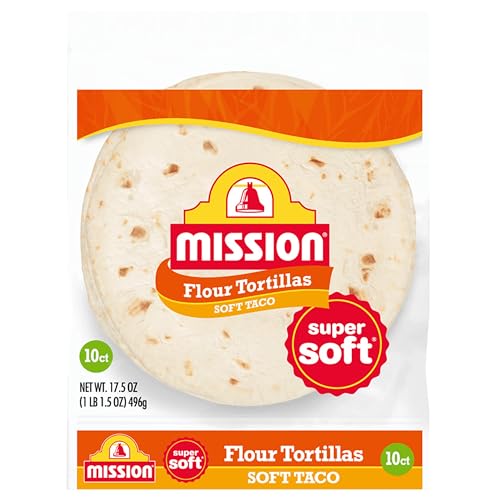
One 10-count package of Mission Soft Taco Flour Tortillas

One 8-count package of Mission Burrito Flour Tortillas

One 20-count package of Guerrero Caseras Fajita Flour Tortillas
5. Assembling the Enchiladas

- Grease a 9×13-inch baking dish and spread a thin layer of enchilada sauce across the bottom. This keeps the first layer of tortillas from sticking and gives the underside some flavor.
- Mix 2 cups shredded cheddar cheese, a 15-ounce can of rinsed black beans, and ½ cup salsa in a bowl. Add any vegetables or other fillings at this stage and fold until evenly distributed.
- Warm the 18 corn tortillas briefly so they bend without cracking. A damp paper towel and 30 seconds in the microwave works; skip this and they split down the middle.
- Spoon two to three tablespoons of filling down the center of one tortilla. Roll it snug, seam side down, into the prepared dish. Pack them tight; loose enchiladas unroll in the oven.
- Pour the remaining enchilada sauce over the rolled tortillas, coating every exposed edge so nothing dries out. Scatter any reserved cheese across the top.
- Bake at 350 degrees until the cheese melts and the sauce bubbles at the edges, about 15 to 25 minutes. Let rest five minutes before serving or the filling slides out.
Recommended Products

One 16 ounce bag of Finely Shredded Mexican-Style Four Cheese Blend

One 32-ounce bag of Finely Shredded Sharp Cheddar Cheese

One 16-ounce bag of Shredded Mild Cheddar Cheese Blend
6. Baking Time and Temperature

The oven temperature for black bean enchiladas splits into two camps, and the baked result changes accordingly.
350°F asks for 20 to 25 minutes, sometimes stretching to 25 minutes if the cheese needs more encouragement. At 400°F, the same dish finishes in 20 minutes flat, with a final 5-minute blast once the cheese goes on top.
I tend toward the lower heat. The extra few minutes buy time for the sauce to bubble through the center without the edges of the tortillas overbrowning.
One source pushes 35 minutes total, but that includes baking the filling sauced first, then adding cheese and returning the dish to the oven. The sequence matters more than the headline number.
Doneness is straightforward: the cheese should be melted and bubbling across the top, with spots beginning to turn gold at the edges. The sauce underneath will have pushed up around the sides of the tortillas.
Pull the dish then, or the cheese stiffens past its best texture. A 5-minute rest on the counter finishes the job without any more heat.
Recommended Products

RICH, AUTHENTIC FLAVOR: Fillo’s Topperfecto Black Beans are slow-simmered with bold Latin spices for a deep, savory taste and perfectly tender texture that elevates any...
7. Serving and What Goes With

The baking dish stays hot for a while after it comes out of the oven. I let the enchiladas cool for about 5 minutes before serving, which keeps the filling from sliding out the moment someone lifts a spatula.
For the finish, I set out 1 cup of Mexican crema or sour cream, diced jalapeño, and a handful of fresh cilantro. The crema cuts the heat from the sauce; the jalapeño adds it back if you want more.
Diced avocado works if you have a ripe one, and jarred salsa rescues the plate when you don’t. A mango salsa on the side brightens the whole dish.
These aren’t decorations.
The cool, sharp toppings balance the heavy, warm center so the meal doesn’t feel like one flat note. I notice people eat more slowly, and more of them, when the table has that contrast.
Recommended Products

SAUCE WITH KICK: Bring medium spiciness to your Tex-Mex dishes with sauce made from tomato puree, chile pepper, and flavorful seasoning

No hydrogenated fats or high fructose corn syrup allowed in any food

Red enchilada sauce features the flavor of red chiles with medium heat for an added kick to your meals
8. Vegetarian, Sweet Potato, and Quinoa Versions

A straight vegetarian version builds the filling entirely from beans and vegetables without meat substitutes.
Rinse a 15-ounce can of black beans so the liquid does not turn the filling gray, then combine with your salsa and any diced onion or pepper you have on hand.
The beans alone give you about 7 grams of fiber per half-cup serving, which is enough to make the meal genuinely filling.
Sweet potato changes the texture from dense to creamy. Two medium sweet potatoes, steamed or microwaved for about 8 minutes 30 seconds, then peeled and cut into bite-size chunks, add vitamin A and a slight sweetness that balances cumin or chili powder.
One approach layers them raw with the beans and bakes everything until tender; another sautés the diced sweet potato first with onion and garlic, which takes roughly 10 minutes but deepens the flavor before it ever hits the oven.
I have found the pre-cooked route more reliable on weeknights, since nothing worse than biting into an underdone sweet potato chunk mid-bite.
Quinoa turns the enchilada into something closer to a grain bowl wrapped in a tortilla.
Half a cup of dry quinoa, rinsed well and simmered in cashew milk for 20 minutes covered, adds complete protein and a slightly nutty texture that holds up to sauce without going mushy.
The spabettie method cooks the quinoa with onion and garlic in the same pot, then layers it with the beans, corn, and roasted Hatch chiles.
The grain absorbs sauce as it bakes, so these reheat better than bean-only versions and do not fall apart on the plate.
Recommended Products

8 oz pouch of flavorful green chile enchilada sauce

Green Chile

SAUCE WITH KICK: Bring mild spiciness to your Tex-Mex dishes with this enchilada sauce made from green chile pepper, green chiles, and jalapeno peppers
9. Chicken and Jackfruit for Meat Eaters and Vegans

Shredded chicken and black beans turn these enchiladas into a filling meal for anyone who wants a big protein boost without extra shopping.
I usually have leftover roast chicken or a rotisserie bird on the counter, and mixing it with black beans, pinto beans, and refried beans stretches one protein into enough filling for a full pan.
Onions, garlic, and a minced jalapeño if you like heat get sautéed in olive oil first, then everything simmers with diced tomatoes, tomato puree, and chili powder until the flavors settle together.
Shredded Mexican cheese goes inside and on top, melted under sauce.
For plant-based eaters, jackfruit does something surprisingly similar in texture. The young green fruit shreds into strands that resemble pulled meat once it cooks down, and it soaks up enchilada sauce the same way chicken does.
A single batch of vegan jackfruit and black bean enchiladas yields ten enchiladas, each running about 171 calories, so the serving is substantial without being heavy.
The filling stays satisfying because black beans carry the bulk and protein while the jackfruit handles the chew.
Recommended Products


One 20-count package of Mission Fajita Flour Tortillas

Add your favorite ingredients to these soft flour tortillas to make burritos and Tex-Mex inspired dishes in the oven or microwave in minutes
Ingredients to Have Ready

Olive oil goes on the list first because every filling starts in a skillet.
1 tablespoon is enough to soften aromatics before the beans go in. Canned black beans are the constant across every version, usually one 15.5-ounce can rinsed and drained, though some recipes stack two cans when beans carry the whole dish.
Tortillas are where the split starts.
Corn or flour both work; corn gives a more traditional enchilada texture that softens into the sauce, flour stays chewier and rolls easier. Ten is the safer buy for a standard 9 by 13 inch baking dish.
Cheese matters for structure as much as flavor. Shredded Mexican blends melt smoothly over the top, but sharp cheddar or Colby jack do the job if that is what your store stocks.
I divide the cheese between the filling and the final layer so the top browns while the inside stays creamy.
Sauce is the other half of the naming.
Red enchilada sauce is what most recipes reach for, either a 10-ounce can or homemade from tomato puree and chiles. Homemade takes longer but lets you control the heat; canned gets dinner on the table.
From there, the variables start: onions and garlic as base aromatics, peppers for heat, cumin and chili powder for depth, maybe jackfruit or sweet potato to bulk the filling.
But those five — oil, beans, tortillas, cheese, sauce — are the trunk of the grocery list. Everything else branches from there.
Recommended Products
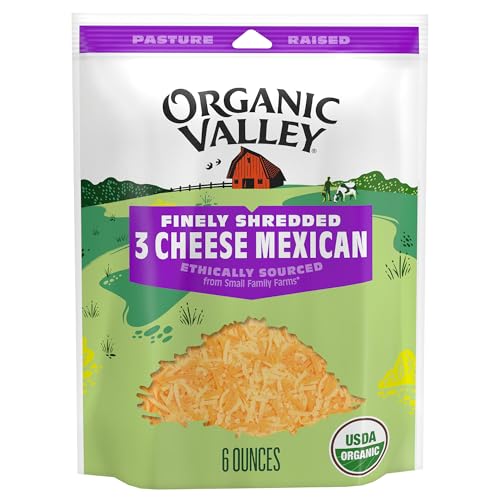
One 6-ounce bag of Organic Valley 3 Cheese Organic Finely Shredded Mexican Cheese Blend

One 7 oz bag of Kraft Shredded Reduced Fat Sharp Cheddar Cheese

One 8 ounce bag of finely shredded mexican four cheese blend
Cooking Times at a Glance

Most recipes land between 20 and 35 minutes of bake time, but the temperature you choose changes what happens inside the tortilla.
A 350°F oven gives the filling more time to meld with the sauce before the cheese sets, while 400°F pushes the top to bubbling faster and can leave the edges of a flour tortilla crisper.
| Temperature | Bake Time | Cheese Finish | Best For |
|---|---|---|---|
| 350°F | 20–25 min | Melted, even | Layered, saucy enchiladas |
| 400°F | 20 min + 5 min with cheese | Spot-browned, intense | Quicker weeknight assembly |
The 35-minute total from some recipes includes the full prep window, not oven time alone. If your sauce is already warm from the stovetop, the shorter bake at either temperature is the number to trust.
Making Them Ahead

Assembly and baking split neatly into two different jobs, and that split is where the weeknight win hides.
Assemble the filling and sauce up to four days ahead, keep them separate in the fridge, and roll the enchiladas only when you are ready to bake.
The tortillas stay intact, the sauce keeps its punch, and the whole thing moves from counter to oven in under 20 minutes.
Baking ahead is the riskier move.
Once sauce meets tortilla, the clock starts on absorption. Reheating a fully baked pan drives moisture deep into the wrap, and the texture turns soft in a way no oven time fully fixes.
If you must bake ahead, do it the same day you plan to eat and reheat covered at moderate heat just until warmed through.
For the assembly-line itself, lay tortillas out in a row, portion filling evenly, roll tight, and snug them seam-down into the dish.
Sauce on top only after every roll is in place. This keeps the line moving and the mess contained, which matters more than it sounds on a Tuesday night.
Frequently Asked Questions
What are black bean enchiladas?
Black bean enchiladas are a Mexican casserole made by rolling tortillas around a black bean filling, arranging them in a baking dish, and baking them under sauce and melted cheese until the edges soften and the top turns spotty brown.
The beans can be whole, mashed, or refried, and the dish typically feeds six people in a 20-to-25-minute bake.
Can you make black bean enchiladas vegan?
Yes, substitute jackfruit for meat and use dairy-free cheese.
Young green jackfruit shreds into strands that resemble pulled meat and soaks up enchilada sauce, while black beans carry the bulk and protein. One batch of vegan jackfruit and black bean enchiladas yields 10 enchiladas at about 171 calories each.
Are black beans good in enchiladas?
Black beans work well in enchiladas because their mild flavor pairs with cumin and chili powder, and their starchy texture holds together through baking.
A 15-ounce can yields roughly 1½ cups drained, providing about 7 grams of fiber per half-cup serving, which makes the meal filling even without meat.
Which beans are best for enchiladas?
Black beans are the standard choice, often combined with pinto beans and refried beans for variety. Refried beans act as a binder to keep the filling from crumbling, while whole black beans give more texture against the sauce and cheese.
Some cooks mash half the black beans and leave the rest whole for the best of both textures.
What are common mistakes when making enchiladas?
Skipping the rinse on canned beans leaves starchy, salty liquid that turns the filling pasty.
Rolling corn tortillas without steaming them first causes cracking, and packing enchiladas too loose makes them unroll in the oven. Pouring all the sauce over the top before baking can oversaturate the tortillas, so reserve some for the table.