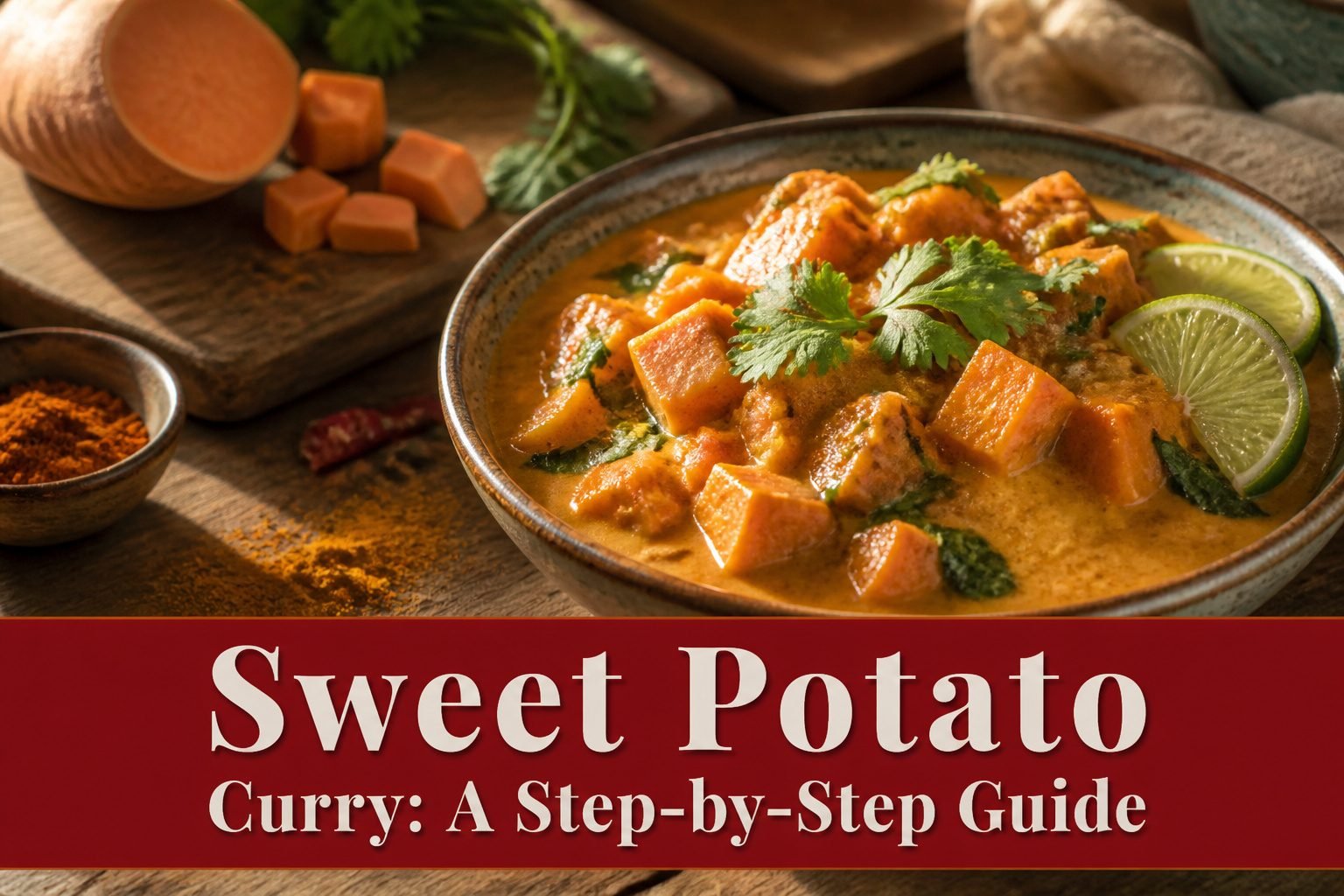

Sweet potato curry is a one-pot stew of cubed sweet potatoes simmered in coconut milk with warm spices.
Stovetop needs 35 minutes of attention, while the slow cooker frees you for 4 to 6 hours but turns the texture silkier, closer to stew than distinct cubes.
Either way, one large sweet potato anchors the pot, and a spoonful of peanut butter, easy to skip, is what makes the sauce cling to rice instead of running off.
What Sweet Potato Curry Is

Sweet potato curry is a one-pot stew built around cubed sweet potatoes simmered in coconut milk with warm spices.
The basic method runs in three stages: aromatics like onion and garlic go into the pot first, then spices hit the hot fat to toast and deepen, and finally the sweet potatoes and coconut milk come in to simmer until the cubes turn tender and the liquid thickens.
Timing depends entirely on your approach. A stovetop version clocks in at about 10 minutes of prep and 35 minutes of cooking.
The slow cooker stretches that same 10 minutes of upfront work across 3 to 4 hours on high, or 4 to 6 hours on low if you would rather not tend a pot.
Either way, the yield lands in the 2-to-6-serving range depending on how generously you portion it over rice.
Most recipes keep the ingredient list short: canned coconut milk, a curry paste or ground spice blend, vegetable broth, and the sweet potatoes themselves. Some versions add spinach or chickpeas; none of them demand special equipment.
Prepare Ingredients

One large sweet potato, about a pound, forms the base.
The peel comes off with a vegetable peeler, then the flesh gets cut into half-inch dice so it roasts evenly and holds its shape in the pan. Onion follows, chopped rough, along with three cloves of garlic minced fine.
A zucchini and a bell pepper, both sliced or diced to similar size, go in next. Some nights I add carrot instead of part of the sweet potato when I want a less sweet, more vegetal curry.
Spinach goes in last, two large handfuls chopped, because it wilts fast and barely needs cooking. Ten to twenty minutes of prep covers it, depending on how many vegetables made the cut.
The skillet waits on the stove while the sweet potato spreads on a baking sheet for its twenty-five minutes at 375°F. No single method owns this part.
A courgette is just a zucchini by another name, and butternut squash swaps in easily come fall.
The work is ordinary knife work, nothing specialty, and the pile of diced vegetables on the counter tells you exactly how much dinner you’re making.
Sauté Aromatics

Fresh ingredients make the aromatics worth doing right.
A wet jar of pre-minced garlic or the bone-dry ginger from the back of the spice drawer will get the job done, but the scent that fills the kitchen when the real stuff hits hot oil is the difference between a curry that smells like dinner and one that smells like your dinner.
Heat a tablespoon or two of oil in your pot or pan over medium heat, then drop in diced onion. Cook until the onions turn soft and translucent, not just less crunchy.
Most recipes list 4 to 10 minutes, so the clock matters less than what you see in the pan. Once they get there, add minced garlic and grated ginger.
Some recipes layer them in with the onion from the start; others hold them back to protect against burning. The ginger especially benefits from being grated straight in, microplane or box grater, so its juice hits the fat immediately.
Stir often, 30 seconds to a minute, until the raw edge is gone and the kitchen smells like something you want to eat.
Add Spices

Two to three tablespoons of curry paste go in once the aromatics have softened, straight onto the hot surface rather than stirred through immediately.
Let it sit there for about thirty seconds so the paste toasts against the pan; this brief contact with direct heat wakes up the chiles, lemongrass, and cumin in a way that raw paste never quite manages, and the kitchen will fill with something far more layered than if you had just stirred it in wet.
Red curry paste carries the most heat, though the level shifts noticeably by brand.
I keep Thai Kitchen around when my daughter is at the table; it is mild enough that she does not push the bowl away, and it sits with the Thai products in most grocery stores.
Yellow carries turmeric and a quieter warmth, green brings fresh chiles and more lemongrass forward. Any of the three works here, so choose based on what your household tolerates and what the jar in your refrigerator happens to be.
Combine Ingredients

The sweet potatoes go in first, peeled and cut into chunks, followed by two 15-ounce cans of chickpeas drained and rinsed, and a 14-ounce can of coconut milk.
A red bell pepper adds color and a little sweetness. Some recipes call for vegetable or chicken broth to thin the curry to a stew-like consistency, while others keep it thicker with just the coconut milk.
A tablespoon or two of peanut butter is the move most people skip.
It does not read as peanut on the palate; it rounds out the coconut milk and adds body that makes the sauce cling to rice instead of running off.
Use creamy, not crunchy, and check whether it is salted before adding more salt separately. Two tablespoons is the range I have seen work, stirred in after the coconut milk goes warm so it melts through without seizing.
Simmer

Sweet potatoes need time to soften all the way through without collapsing into mush, and the method you picked sets that clock.
On the stovetop, a Dutch oven at a gentle bubble takes about 15 to 35 minutes, the shorter end if you diced them small, the longer if you went with hearty chunks.
Stir every few minutes so nothing scorches on the bottom; coconut milk sugars can catch fast.
The slow cooker stretches the same job across a much wider window. BBC Good Food has this right:
cover the slow cooker with a lid and cook for 6–8hrs or until the sweet potatoes are tender
That 6 to 8 hour range means you can start it at nine in the morning and not worry until dinner, but it also means the texture turns silkier, closer to a stew than a curry with distinct pieces.
Either way, the sweet potatoes are done when a knife slides through the center of the biggest cube without resistance.
Pull them early and you get crunch in a dish that should be yielding; push too far and the whole pot goes to paste.
Finish and Serve

The final two minutes matter more than most people think. I turn the burner off and stir in 2 teaspoons to 2 tablespoons of lime juice, tasting as I go.
Two teaspoons brightens the coconut without shouting; two tablespoons cuts through heavier spice. That range exists because sweet potatoes vary, and yesterday’s mild batch needed the full hit while Monday’s barely wanted half.
Rice is the obvious landing spot. Jasmine rice soaks up the sauce cleanly; basmati separates into fragrant grains that don’t clump.
Naan works when I want the starch to do double duty as a scoop, which happens more often than I plan for. Couscous is the fastest option, ready in five minutes if the rest of dinner ran late.
Fresh cilantro goes on at the table, never earlier. Heat wilts it into sad green strings.
A second squeeze of lime over the bowl right before eating revives anything that sat too long on the stove. These aren’t decorations, they’re corrections for a dish that keeps developing after you stop cooking.
Curry Paste Types Compared

I have never once seen a recipe specify different cooking times for red, yellow, or green curry paste, which means the choice is purely about flavor and heat.
Inline table comparing paste options:
| Red | Yellow | Green | |
|---|---|---|---|
| Heat level | Varies by brand; some are very mild | Likely mild–moderate (no specific data) | Likely moderate–hot (no specific data) |
| Dominant spices | Chili peppers, garlic, lemongrass, ginger, kaffir lime leaves, cumin, coriander | Turmeric and curry powder base | Fresh green chilies, basil, lime |
| Best for if you… | Want flexibility to tone heat up or down, or cook for kids | Prefer earthy warmth and a golden color | Like bright, herbaceous punch with serious kick |
My practical advice: red curry paste is the safest starting point because brand heat levels are transparent, and you can taste-test before adding.
Yellow brings a mellower, almost Indian-curry warmth that still reads as Thai. Green is the bold pick; it will dominate the sweet potato rather than complement it.
Mixing red and yellow curry pastes layers the lemongrass edge of red against yellow’s turmeric depth without either stealing the show.
Nutritional Notes

A finished bowl of sweet potato curry lands somewhere between 345 and 649 calories per serving, depending on whether you keep it lean with chickpeas and broth or go full coconut milk and cream.
The sweet potatoes carry the heavy nutritional lifting here. One serving can deliver more than 26,000 IU of vitamin A, the kind of number that explains why your grandmother called them good for your eyes.
The fiber sits around 8 grams, enough to keep the meal from feeling like it vanished an hour later.
Coconut milk, where you use it, adds the saturated fat that pushes those calorie counts toward the upper end. It also brings iron and calcium into the pot, roughly 4 mg and 131–148 mg respectively in the versions that list it.
Some cooks splash in dairy cream instead for a lighter, less tropical finish; the trade is fewer minerals and a sharper calorie drop.
I have not seen reliable head-to-head charts breaking down a Thai red curry against a chickpea masala or a korma-style bowl.
The range spans too wide with the variables: oil, cream versus coconut milk, whether you bulk it out with lentils or keep it mostly sweet potato.
The numbers above come from specific recipes, not from a standardized database, so treat them as guideposts rather than guarantees.
Storing Leftovers

Leftover sweet potato curry keeps covered in an airtight container in the refrigerator for up to 5 days. The coconut milk base and dense sweet potatoes hold up well, though the texture softens slightly each day.
For longer storage, cool the curry to room temperature before transferring it to a freezer-safe container.
Frozen leftover curry lasts up to 3 months, though I would push it to 2 for the best texture. The sweet potatoes can turn mealy and the sauce separate if it sits too long.
Defrost frozen curry overnight in the refrigerator, or reheat it straight from frozen on low heat in the microwave or on the stovetop.
Warm it gently, stirring now and then, and add a splash of coconut milk or vegetable broth if the sauce needs loosening.
The chickpeas hold their shape better than you’d expect, but the sweet potatoes will be softer than they were fresh.
Frequently Asked Questions
What is sweet potato curry?
Sweet potato curry is a one-pot stew built around cubed sweet potatoes simmered in coconut milk with warm spices.
The dish comes together in three stages: aromatics soften in hot oil, spices toast to deepen their flavor, and then the sweet potatoes and coconut milk simmer until tender.
Most versions keep the ingredient list short and yield 2 to 6 servings depending on portion size.
What can I serve with sweet potato curry?
Jasmine rice soaks up the sauce cleanly, while basmati stays fragrant and separate. Naan works as both starch and scoop, and couscous is the fastest option at about five minutes.
Finish each bowl with fresh cilantro and a squeeze of lime at the table; heat wilts the herbs and dulls the citrus if added earlier.