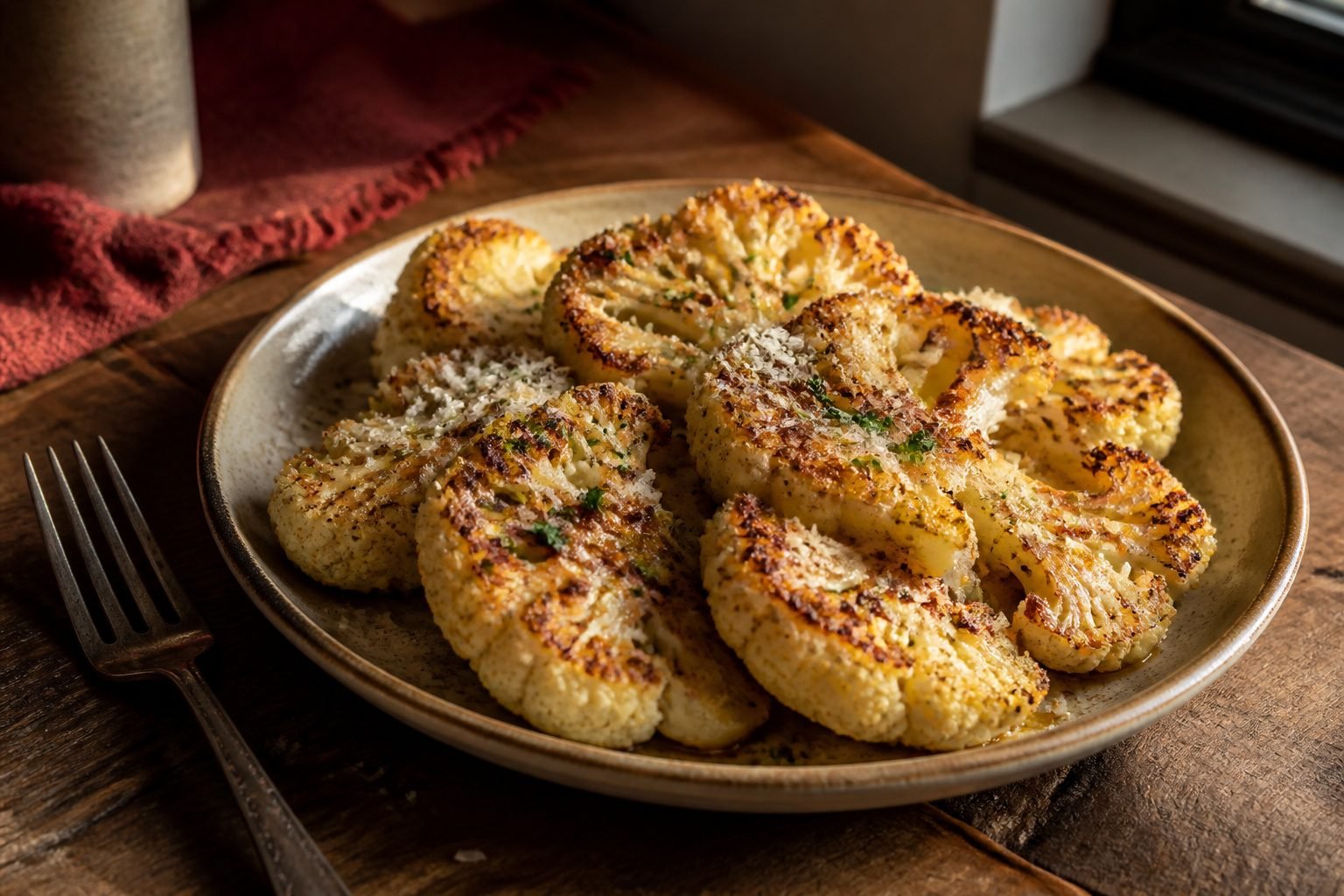

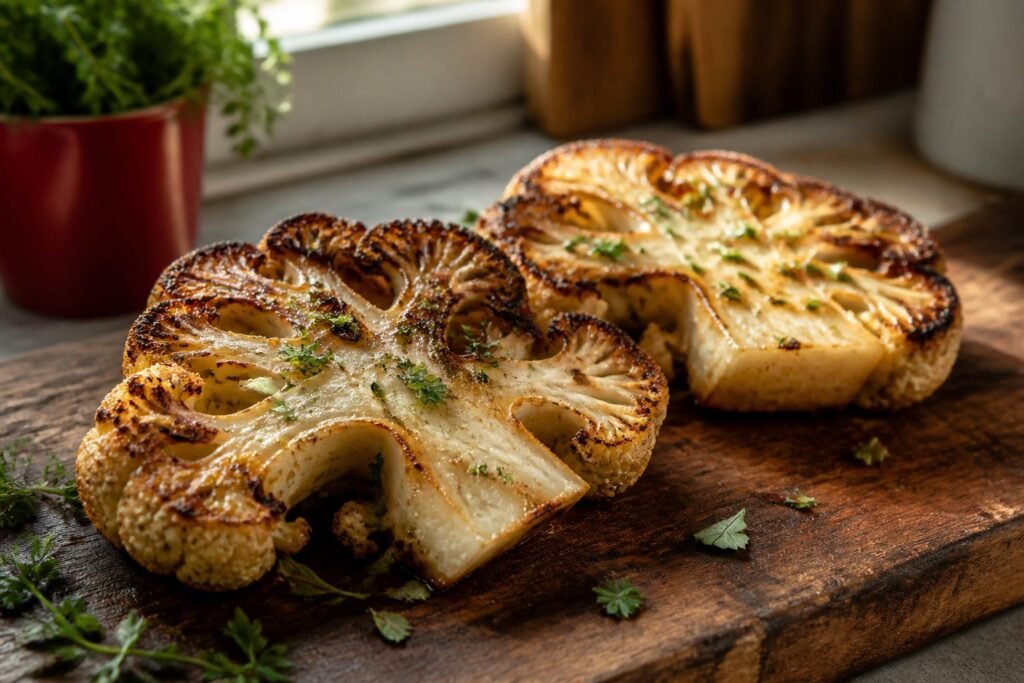
The center cut of a large cauliflower, roasted at 425°F until the edges turn chestnut and the stem softens to cream, eats like a main dish rather than a vegetable side.
What changes the outcome is thickness: anything under half an inch crisps to a plank in 20 minutes, while a true center-plate steak needs a full inch and a half, which pushes the timer to 35 or 40.
Ingredients

A large cauliflower, somewhere around 2 to 2½ pounds, gives you the most workable slices. Smaller heads work too, though you may end up with more crumble than steak from the center.
- 1 large head cauliflower
- 3 tablespoons olive oil
- ½ teaspoon kosher salt, plus more to taste
- ¼ teaspoon freshly cracked black pepper
- ½ teaspoon garlic powder
- ½ teaspoon smoked paprika
- ½ teaspoon Italian seasoning
- ¼ cup shredded Gruyère, Parmesan, or mozzarella (optional, for the last 5 minutes)
Some nights I stop at salt, pepper, and oil.
Other nights I layer all three dried seasonings together; the combination reads as savory without going in any one direction. The cheese goes on only if the steaks need to carry the whole plate.
Parmesan crisps into a thin crust, mozzarella goes soft and stringy, and Gruyère lands somewhere between the two with a nutty note that holds up to the roasting.
Recommended Products
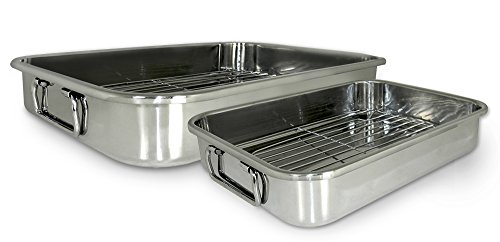
Constructed in durable stainless steel, these two pans and roasting racks are differently-sized for your convenience

VERSATILE ROASTING PAN – A cookware essential. This big 15 inch roaster is ideal for cooking turkey, chicken or beef, along with other meats and vegetables.

EXCEPTIONAL DESIGN: The Cuisinart 16-inch rectangular roaster is made with a high-performance stainless steel exterior and riveted stainless steel handles. The steel rack is large enough to handle a big Thanksgiving turkey and perfect for slow-roasting root vegetables
How to Roast Cauliflower Steaks

- Heat the oven to 400°F for standard roasting, or push to 425°F–450°F if you want crisper, more deeply browned edges.
- Pull off the outer leaves and trim just enough stem to create a flat base, keeping the core intact so the slices hold together through roasting.
- Cut the head into ½-inch to 1½-inch thick slices from top to stem; the exact thickness depends on how many intact steaks your cauliflower will yield. Wider heads give you more center-cut pieces that stay whole.
- Brush both sides with olive oil and season with salt and pepper. Add garlic powder, smoked paprika, dried herbs, or a brush of marinara if you want more going on.
- Roast 20 to 40 minutes, flipping gently halfway through, until the cauliflower is golden and tender enough to pierce with a fork. Thicker slices and lower oven temperatures sit at the longer end of that range.
- If you want melted cheese or a broiled finish, top the steaks and run them under the broiler for 2 to 3 minutes, watching closely so nothing burns.
Recommended Products

RICH & BOLD FLAVOR: Reach for the flavor of bold garlic and rich olive oil to infuse everyday and special occasion meals with unforgettable flavor the whole family will love.
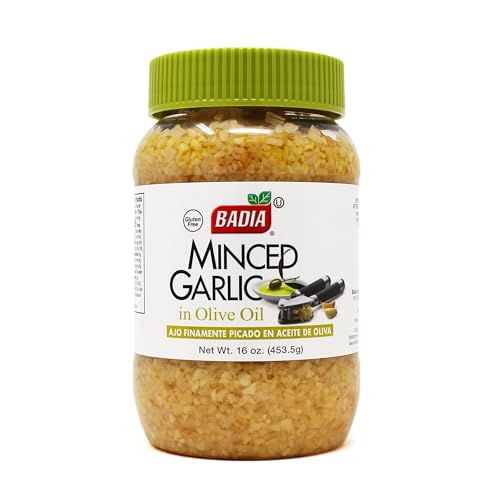
Convenient Pre-Minced Garlic: Enjoy the bold flavor of fresh garlic without the prep work—this jar contains finely minced garlic, ready to use straight from the jar, saving time in your everyday cooking

Garlic Minced
Cooking Temperature and Time

Thick-cut cauliflower takes the oven temperature differently than florets.
Most nights I roast at 425°F, which sits right in the middle of the workable range. 400°F works fine; 450°F is the ceiling, not the default, and anything past that will char the edges before the stem softens.
Thickness is what actually sets the clock. A half-inch steak, which is more of a plank than a meal, crisps in 20 to 25 minutes.
One inch, the width I aim for when the head cooperates, needs 25 to 30. When I get greedy and cut closer to an inch and a half, planning to serve it as a true center-plate piece, the oven needs 35 to 40 minutes.
That extra time is structural: the dense core has to steam itself tender while the exterior stays in browning range.
Flipping at the halfway point is non-negotiable.
The sheet pan has hot spots, and the first side down always browns harder. I set a timer when I slide the pan in, then flip without fuss when it sounds.
Doneness is fork-tender all the way through the stem, not just the florets around the rim.
The edges should be deeply golden, almost edged toward chestnut, before you pull them. Pale cauliflower at the center means ten more minutes, no exceptions.
Recommended Products

Made from smoking and drying sweet peppers

ALL FLAVOR – Do you find that most paprikas are all color, no flavor? La Dalia is different. This sweet smoked paprika has a deep red color, rich smoky flavor, and inviting aroma that brings eggs, meats, chicken, potatoes, vegetables, and sauces to life. You'll never wonder why you add paprika to food again.

A rich, smoky take on classic paprika, with mild heat and subtle sweetness
Seasoning That Works

Olive oil, salt, and black pepper are where I always start. A half teaspoon of each, measured onto the cut surface and rubbed in with your fingers, gives the cauliflower something to brown against.
I add two or three tablespoons of oil for a medium head, which is enough to coat without pooling. Three garlic cloves, minced fine and pressed into the oil first, will perfume the whole pan without burning.
From there, the variations stack up fast.
Smoked paprika brings heat and a faint campfire note that turns the kitchen into something you notice. Italian seasoning works when I want herby and don’t feel like chopping fresh herbs on a Tuesday.
Garlic powder, not fresh, is the honest move on nights when peeling feels like too much. The flavor’s flatter, but it still works.
Cheese goes on at the end, not the start.
Parmesan shavings melt in the residual heat. Mozzarella, a full cup shredded, turns glossy and brown under the broiler.
Gruyère is the one I reach for when the steaks are the main event; five to eight minutes at the end of roasting is all it takes to melt without collapsing the slice.
Sauce is where the meal finds its direction.
Chimichurri, sharp with red wine vinegar, cuts through the caramelized edges. Marinara, three quarters of a cup warmed, makes it a kind of deconstructed parm.
Cashew queso, for the dairy-free nights, clings better than you’d expect. A caper and pine nut vinaigrette, shaken in a jar, turns the whole plate bright.
Recommended Products
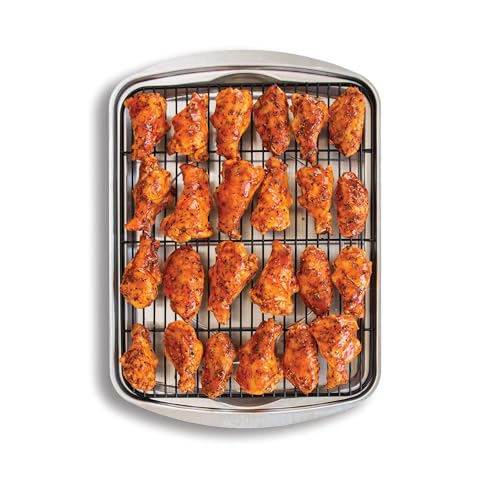
Great for making a variety of delicious treats like bacon, jerky, dried fruits, crisp fries, veggies and more

Our popular natural aluminum quarter sheet with a nesting, oven-safe and nonstick steel grid
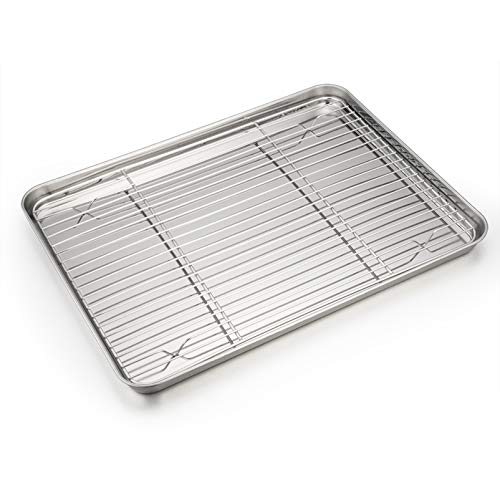
【HEALTHY】P&P CHEF baking sheet and rack set is made of high quality pure stainless steel without any toxic material or chemical coating, Rust free and healthy for everyday use
Serving and Pairing

Roasted cauliflower steaks work as a main dish or a side, and the distinction matters more for what goes on the plate beside them than for the steaks themselves.
Serve them over farro or quinoa when you need the meal to feel substantial, or keep things light with a simple green salad and a drizzle of olive oil.
The steaks can handle a heavy sauce, which is where they shift from supporting player to center of the meal.
Chimichurri holds up well against the roasted edges, marinara turns the plate into something Italian-adjacent, and a lemon-herb sauce keeps the flavor bright without competing with the caramelization you worked for.
Each of those three, chimichurri, marinara, or lemon-herb, is a practical choice rather than a restaurant trick. One cauliflower yields two thick steaks, so plan accordingly when you’re deciding whether this is dinner or accompaniment.
Recommended Products

BIG ROASTING PAN: Large roasting pan with rack in sturdy, durable steel is perfect for roast beef, chicken, and turkeys up to 20lb, and it's great for lasagna and casseroles for a crowd too

BIGGER ROASTING PAN:Measuring 16.6" x 12.6", it accommodates your whole turkey and sides, with 2.75" tall walls to lock in grease.
Storage and Reheating

Leftover cauliflower steaks keep 3 to 4 days in an airtight container in the refrigerator. They go limp faster than florets, so the container needs to seal tight.
Reheating is where most people slip. A microwave works in a hurry, but it steams the cut surfaces and turns them soggy within a minute.
The oven at 375°F brings the crisp edges back, or a hot skillet with a thin film of oil does the same job faster.
Both take longer than the microwave, but the texture difference is worth the extra pan to wash.
If you want to prep ahead, slicing the raw cauliflower a day early is fine.
Salt it right before it goes into the oven, though. Salt draws moisture, and salted cauliflower left sitting weeps onto the board and roasts pale and soft instead of caramelized.
Recommended Products

Rich, Umami-Packed Flavor: Made from fermented black garlic, this seasoning delivers a deep, slightly sweet, and savory umami taste with hints of molasses, balsamic, and roasted garlic, adding depth to any dish

One 3.9-ounce bottle of Garlic Powder

4 Dipping Seasonings
Why Cauliflower Steaks Work

Cauliflower steaks solve a problem that florets never quite fix. The central stem holds the slice together, giving you a substantial piece that sits flat on the plate and browns evenly across the whole surface.
Florets tumble and crowd, steaming where they touch instead of caramelizing. A steak gives each cut side direct, uninterrupted contact with the hot pan or baking sheet.
The technique also stretches one head into something that feels like a main.
A medium, roughly 2 1/2-pound cauliflower yields about two intact center slices thick enough to hold their shape, roughly 2 inches each. The end pieces and loose florets roast alongside; nothing wastes, but the steaks are what you build the plate around.
Nutritionally, cauliflower is low calorie and high fiber, friendly to most restricted diets without requiring substitutions.
The practical draw, though, is texture. The stem softens to a creamy center while the flat faces turn deeply golden, a combination florets can’t match because they cook unevenly and fall apart before they get there.
Recommended Products

Italian Seasoning - This premium organic blend of herbs like basil, oregano, and thyme brings a rich, aromatic flavor that elevates your Mediterranean and Italian dishes.

Rich, Smoky Flavor – Fasori Smoked Paprika delivers a bold, authentic wood-smoked taste that enhances meats, stews, soups, chili, roasted vegetables, eggs, and BBQ rubs.

OUR BEST HERBS & SPICES: Awaken your senses with a curated collection of more than 70 herbs, spices, seasonings, and extracts. Discover our finest flavors from the McCormick Gourmet Collection.
Frequently Asked Questions
Recommended Products
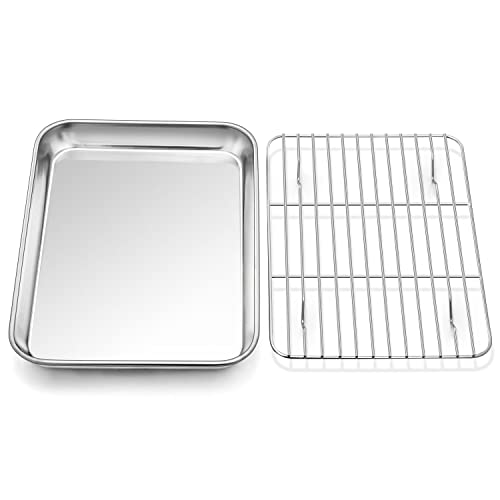
【HEALTHY】Both the toaster oven pan and wire rack are made of high quality stainless steel without any other materials or toxic teflon coating, Enjoy a healthier cooking time

SET OF 3 BAKING SHEETS: GoodCook’s Nonstick Cookie Sheet Set comes with a small 13” x 9”, medium 15” x 10” and large 17” x 11” baking sheet to provide the perfect options for any of your baking needs.

SET OF 2 MINI BAKING SHEETS: Comes with 2 mini 9" x 6.2" baking sheets for your favorite toaster oven dishes
How do you cut cauliflower into steaks?
Trim the outer leaves and just enough stem to create a flat base, keeping the core intact so the slices stay together.
Cut from top to stem into slices between ½ inch and 1½ inches thick. Wider heads give you more center-cut pieces that hold their shape.
How do you keep cauliflower steaks from falling apart?
Leave the core intact when you trim; it is what holds each slice together through roasting.
Each steak needs some of the stalk attached. A large head around 2 to 2½ pounds gives you the sturdiest center slices.
How long do you roast cauliflower steaks?
Roast 20 to 40 minutes, flipping gently halfway through.
A half-inch steak takes 20 to 25 minutes, a one-inch steak takes 25 to 30, and one closer to 1½ inches needs 35 to 40. Doneness means fork-tender all the way through the stem, not just the florets.
What are the best seasonings for cauliflower steaks?
Start with olive oil, kosher salt, and black pepper.
From there, smoked paprika adds heat, Italian seasoning gives an herby profile, and garlic powder works when fresh garlic feels like too much. Cheese goes on at the end, not the start, if you want it.
What can I serve with cauliflower steaks?
Serve over farro or quinoa for a substantial meal, or keep it light with a green salad.
Chimichurri, marinara, and lemon-herb sauce each give the plate a different direction. The steaks can anchor a main dish or work as a side.
What is the point of cauliflower steak?
The intact central stem holds the slice together so it browns evenly across a flat surface, something florets cannot do because they tumble and steam where they touch.
The result is a substantial piece that centers a plate, with a creamy interior and deeply golden edges.
How do you make crispy roasted cauliflower?
Use a higher oven temperature, around 425°F to 450°F, and do not crowd the pan.
Brush both sides with oil and flip halfway through so each cut side gets direct, uninterrupted contact with the hot sheet. Thinner slices crisp faster than thick ones.
How do you reheat cauliflower steaks?
Reheat in a 375°F oven or a hot skillet with a thin film of oil.
Both bring the crisp edges back. A microwave works in a hurry but steams the cut surfaces and turns them soggy within a minute.